
MBBS (AIIMS), MS (Surgery, AIIMS), MNAMS, FACS (USA), FICS (USA), FUICC
Wed, 22 Jul 2026
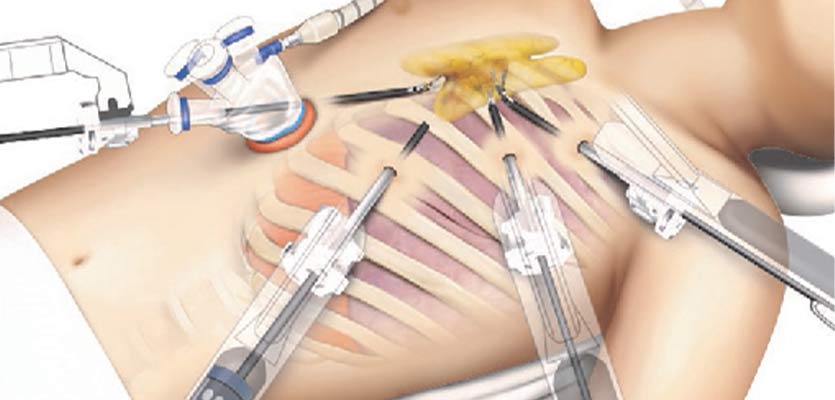
Myasthenia Gravis is a chronic autoimmune disorder affecting the neuromuscular junction, causing muscle weakness and fatigue. If not diagnosed and treated early, the condition is progressive and eventually affects a patient’s quality of life.
Dr. Arvind Kumar, a thoracic surgeon specializing in managing this neuromuscular disorder, offers advanced and personalized care to individuals with Myasthenia Gravis.
Myasthenia Gravis is a chronic neuromuscular disorder that causes weakness in the body’s voluntary muscles, leading to various symptoms pertaining to breathing, swallowing, and even facial movements.
The majority of the patients who suffer from this chronic complication often get tired quickly, and while there are no direct treatments to cure the condition, the advanced treatments help with symptom management and improve a patient’s quality of life.
The muscle weakness caused by this condition comes and goes in waves, and the symptoms generally get better with proper rest. However, as we mentioned, the lack of early diagnosis and treatment often leads to the condition progressing and worsening over time.
If you exhibit symptoms of Myasthenia Gravis, the first step is to schedule a consultation to confirm the diagnosis. Identifying the symptoms and ascertaining the cause is the first step toward curating a tailored treatment plan.
Dr. Arvind Kumar and his team of specialists offer a comprehensive assessment of the symptoms and situation and conduct tests to confirm the diagnosis first. From there, the required treatment plan follows.
Following are some of the most popular treatment options for Myasthenia Gravis that Dr. Arvind Kumar specializes in:
One of Dr. Kumars areas of specialization is thymectomy, a surgical procedure involving the removal of the thymus gland. This gland plays a crucial role in the immune system, and its removal has shown significant benefits for MG patients.
Thymectomy is often considered the cornerstone of Myasthenia Gravis treatment, especially in cases where the thymus is hyperactive or tumor-related.
Besides the standard surgical approaches, one niche that Dr. Arvind specializes in is the use of minimally invasive techniques, including ones like video-assisted thoracoscopic surgery (VATS). With years of expertise, the treatment guarantees symptom improvement and helps with remission.
When talking about the treatment options for Myasthenia Gravis, this is the most diverse category. It includes a variety of medication options, each targeted towards the patients specific needs and symptoms they are experiencing.
Dr. Kumar employs a personalized approach to fine-tune relief through a variety of medications, and the following are a few options worth highlighting:
At the forefront of medication management for MG are acetylcholinesterase inhibitors, such as pyridostigmine. These medications work by enhancing the communication between nerves and muscles, thereby alleviating muscle weakness and fatigue.
The dosage requirements and the frequency of these inhibitors are tailored to the specific requirements of each patient.
In cases where MG symptoms are more severe or refractory to other treatments, corticosteroids may be introduced. These anti-inflammatory medications help modulate the immune response and reduce the production of antibodies targeting the neuromuscular junction
For long-term management and to reduce the reliance on corticosteroids, Dr. Kumar may prescribe immunosuppressants. These medications suppress the overactive immune system, mitigating the autoimmune response responsible for MG symptoms.
IVIG therapy involves the administration of a concentrated solution of immunoglobulins, which are antibodies derived from the plasma of healthy donors. These immunoglobulins play a crucial role in modulating the immune system and are utilized therapeutically to impart their immunomodulatory effects.
IVIG is administered intravenously, typically over several hours in a hospital or clinical setting. The dosage and frequency of IVIG treatments can vary depending on the severity of MG symptoms, the individual patients response, and the specific treatment plan crafted by Dr. Arvind Kumar.
Plasma Exchange is a therapeutic apheresis procedure that involves removing, separating, and replacing plasma, the liquid component of blood. During Plasmapheresis, the patients blood is withdrawn, plasma is separated from blood cells, and the cells are then reinfused with a replacement solution.
The treatment effectively removes harmful antibodies, immune complexes, and other factors contributing to the autoimmune response seen in MG.
Note: Irrespective of the treatment plan, the first step to availing treatment for Myasthenia Gravis starts with an initial consultation to confirm the diagnosis, assess the severity of the condition, and then curate a personalized treatment plan for favorable outcomes for the patient.
Myasthenia Gravis is a debilitating chronic and progressive disorder that can get worse with time. If you are experiencing any alarming signs and symptoms, it is recommended that you schedule your consultation with Dr. Arvind to prioritize early diagnosis and tailored treatment plans.
Experience expert care beyond the basics, offering hope and empowerment for individuals living with Myasthenia Gravis.
Thymectomy is the surgical removal of the thymus gland, which has been shown to improve symptoms and, in some cases, lead to remission by altering the immune response. Individual response to the treatment will vary, which is why a thorough assessment is mandatory ahead of time.
Medications such as acetylcholinesterase inhibitors, immunosuppressants, and corticosteroids can help control symptoms by modulating the immune system and improving neuromuscular transmission.
IVIG therapy involves infusions of immunoglobulins to boost the immune system and alleviate the symptoms of Myasthenia Gravis.
At present, thymectomy seems to be the most viable surgical intervention for the treatment of Myasthenia Gravis in the patients. However, it is vital to keep in mind that every patient’s experience with the disease is different, so a thorough evaluation is recommended to assert the ideal treatment route for every patient.
The timeline for improvement varies for each patient. It depends on the patient’s current condition, the severity of the disorder, and also how the patient is responding to the treatment that they are being administered.
Besides ongoing treatment, introducing lifestyle modifications like stress management, regular exercise, and a balanced diet can help escalate the results from the initial treatment.

What is Myasthenia Gravis | Causes, Symptoms and Effects of Myasthenia Gravis
Myasthenia Gravis: Test, Diagnosis and Treatment in Delhi, India

Role of Thymectomy in Myasthenia Gravis Treatment
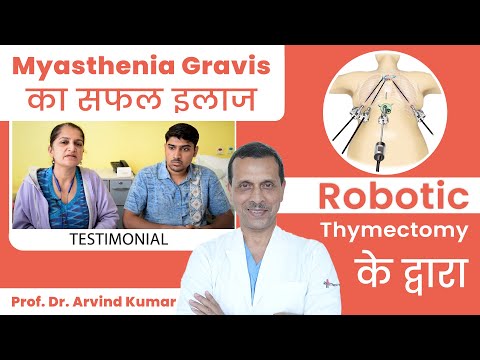
Myasthenia Gravis
Myasthenia Gravis का सफल इलाज Robotic Thymectomy के दà¥à¤µà¤¾à¤°à¤¾
Successful Surgical removal of Thymoma tumour with Robotic assistance
Myasthenia Gravis with Thymoma Surgery

Patient’s Feedback - Robotic Thymectomy for Myasthenia Gravis
Patient Experience on Robotic Thymectomy for Myasthenia Gravis

Thymoma Patient Video | Robotic Surgical Removal
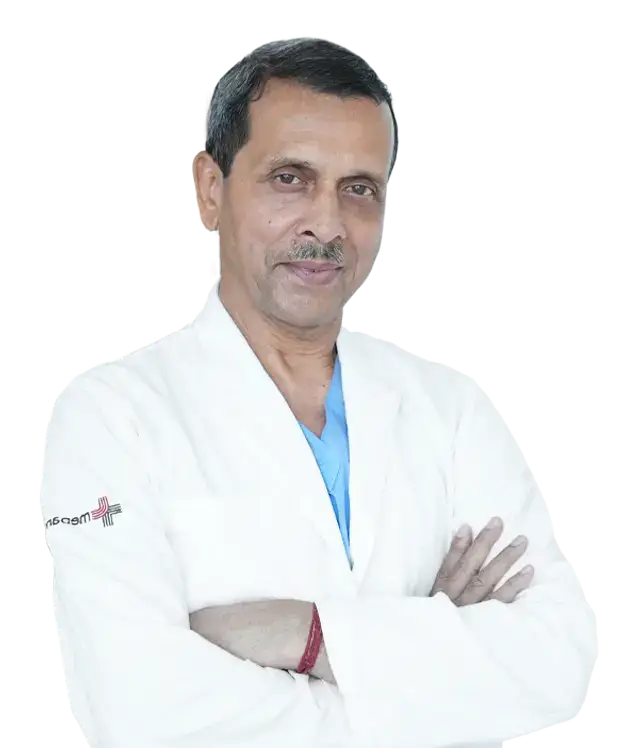
Dr. Arvind Kumar is a highly accomplished Chest surgeon with experience of over 20,000 major chest surgeries, including open surgery, VATS(Video assisted Thoracic Surgery), Robotic Chest Surgery, and Lung Transplantation, reflecting decades of clinical excellence and leadership in chest surgery.
Copyright @ (Prof.) Dr. Arvind Kumar. All Rights Reserved / Thoracic Surgical Oncologist
License Number: U.P State Medical Council (India) No. 27637


 Contact
 +91-9773635888