
MBBS (AIIMS), MS (Surgery, AIIMS), MNAMS, FACS (USA), FICS (USA), FUICC
Mon, 21 Sep 2026
Coughing up blood (hemoptysis) can be an alarming symptom that should never be ignored. While small streaks of blood can sometimes occur with infections, persistent or heavy hemoptysis can signal a serious underlying lung condition that needs prompt evaluation.
Dr. Arvind Kumar offers advanced diagnosis, medical management, interventional bronchoscopy, and minimally invasive thoracic surgery for patients with recurrent or severe hemoptysis.
With decades of experience managing complex lung and thoracic disorders, Dr. Arvind Kumar has treated patients with bronchiectasis, lung infections, tuberculosis-related complications, pulmonary tumors, vascular abnormalities, and other conditions responsible for hemoptysis. Every treatment plan is tailored to identify and address the root cause while preserving as much healthy lung tissue as possible.
Hemoptysis is a symptom, not a disease in itself — successful treatment depends on accurately identifying and treating the underlying cause. Care with Dr. Arvind Kumar includes:
Hemoptysis refers to coughing up blood or blood-stained sputum originating from the lungs or airways. The amount can range from small streaks mixed with mucus to significant bleeding that becomes a medical emergency. Hemoptysis is sometimes confused with vomiting blood from the stomach, so proper medical evaluation is needed to determine the actual source of bleeding. While minor bleeding can stop on its own, recurrent or severe hemoptysis often signals an underlying lung disorder that needs prompt diagnosis.
Several respiratory conditions can cause bleeding from the lungs. Identifying the exact cause is the first step toward effective treatment:
Consult a hemoptysis specialist immediately if you experience:
Severe hemoptysis is a medical emergency and needs immediate treatment to prevent airway obstruction and respiratory failure.
Since hemoptysis is a symptom of an underlying disease rather than a disease itself, accurate diagnosis is essential before planning treatment. Dr. Arvind Kumar performs a comprehensive evaluation using advanced diagnostic techniques.
A detailed medical history is taken, covering the duration and frequency of bleeding, quantity of blood, smoking history, previous tuberculosis or lung infections, occupational exposure, existing lung disease, previous chest surgeries, and family history, along with a physical examination.
Often the first imaging test, used to detect lung infection, masses, cavities, or structural abnormalities.
Provides detailed images of the lungs to help identify bronchiectasis, lung tumors, cavities, blood vessel abnormalities, chronic infections, and areas of active bleeding.
Used to evaluate abnormal bronchial arteries or pulmonary blood vessels responsible for recurrent bleeding.
One of the most valuable investigations for hemoptysis — using a flexible bronchoscope, Dr. Arvind Kumar can locate the bleeding site, remove blood clots, take a tissue biopsy if needed, identify tumors, detect infections, and evaluate airway abnormalities. In some cases, bronchoscopy can also help control active bleeding.
May include a complete blood count (CBC), coagulation profile, sputum examination, tuberculosis testing, fungal cultures, autoimmune markers, and kidney and liver function tests.
Treatment depends entirely on the underlying cause, the severity of bleeding, and the patient’s overall health. Some patients improve with medications, while others need minimally invasive procedures or surgery. Options include:
For recurrent or severe bleeding, bronchial artery embolization is often recommended. This minimally invasive procedure, performed by an interventional radiologist, identifies and blocks the abnormal bleeding artery using embolic materials. Advantages include rapid control of bleeding, a short hospital stay, no major surgical incision, and faster recovery — though BAE may not permanently cure the underlying disease, and surgery may still be needed if bleeding recurs.
Although many patients can be treated without surgery, hemoptysis surgery becomes necessary when bleeding is severe, recurrent, or caused by structural lung disease that cannot be managed conservatively. Surgery may be recommended for:
The goal of surgery is to remove the diseased portion of the lung responsible for repeated bleeding while preserving as much healthy lung tissue as possible.
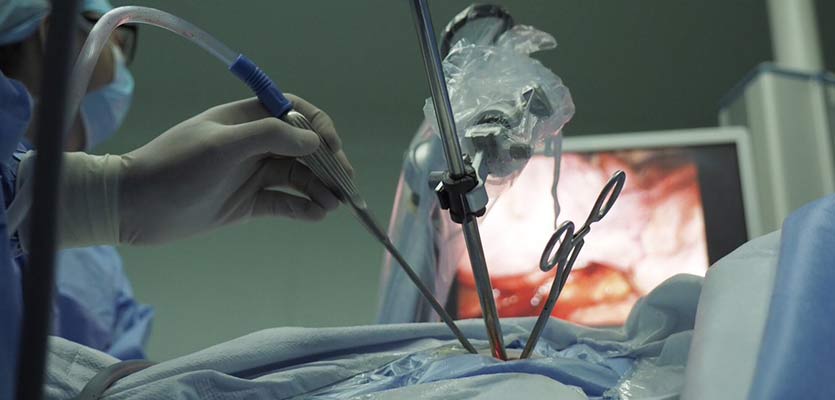
Whenever feasible, Dr. Arvind Kumar performs VATS, offering smaller incisions, less postoperative pain, reduced blood loss, faster recovery, a shorter hospital stay, and a better cosmetic outcome.
Removal of one affected lobe of the lung when disease is confined to a single lobe.
Removal of only the diseased lung segment while preserving healthy lung tissue.
Performed for small, localized lesions causing recurrent bleeding.
In selected complex cases where an entire lung is severely damaged and non-functional, complete lung removal may be needed.
Recovery depends on the type of surgery, lung function, and the underlying disease. Hospital stay typically ranges from 3–5 days after VATS to 5–8 days after open thoracic surgery. Pain management may include epidural analgesia, patient-controlled analgesia, regional nerve blocks, or oral medications, enabling deep breathing, effective coughing, and early mobilization. Pulmonary rehabilitation — breathing exercises, incentive spirometry, regular walking, and airway clearance techniques — supports recovery.
Most patients return to light activities within 2–3 weeks, office work within 4–6 weeks, and full recovery within 6–12 weeks, depending on the procedure and individual healing.
Cost varies depending on diagnostic investigations, severity of the condition, hospital admission, bronchoscopy procedures, bronchial artery embolization, the type of surgery performed, ICU stay if required, and postoperative rehabilitation. After a detailed evaluation, Dr. Arvind Kumar provides a personalized treatment plan and cost estimate based on the patient’s specific condition.
If you are looking for hemoptysis treatment in India, Dr. Arvind Kumar offers extensive experience managing complex lung diseases through advanced diagnostics, minimally invasive procedures, and precision thoracic surgery.
Book your consultation today to receive a comprehensive evaluation and an individualized treatment plan.
No. While lung cancer can cause hemoptysis, many cases result from infections, bronchiectasis, tuberculosis, fungal diseases, or inflammatory lung conditions. Proper evaluation is essential to identify the exact cause.
Immediate medical attention is required if you cough up a large amount of blood, experience difficulty breathing, chest pain, dizziness, or repeated episodes of bleeding.
No. Many patients respond well to medications or minimally invasive procedures. Surgery is recommended only when the bleeding is recurrent, severe, or caused by localized lung disease that cannot be treated effectively through conservative measures.
The success rate is generally favorable when the underlying cause is accurately identified and surgery is performed by an experienced thoracic surgeon. Outcomes depend on the patient's condition, overall lung function, and the nature of the disease.
Yes. Whenever clinically appropriate, Dr. Arvind Kumar performs Video-Assisted Thoracoscopic Surgery (VATS), which offers smaller incisions, less pain, quicker recovery, and shorter hospital stays compared to traditional open surgery.
Most patients recover within 6 to 12 weeks, although the exact recovery period depends on the type of surgery performed and the patient's overall health.

Dr. Arvind Kumar is a highly accomplished Chest surgeon with experience of over 20,000 major chest surgeries, including open surgery, VATS(Video assisted Thoracic Surgery), Robotic Chest Surgery, and Lung Transplantation, reflecting decades of clinical excellence and leadership in chest surgery.
Copyright @ (Prof.) Dr. Arvind Kumar. All Rights Reserved / Thoracic Surgical Oncologist
License Number: U.P State Medical Council (India) No. 27637


 Contact
 +91-9773635888